Mr. Heng ·
tips  | |
| |
Why F&B Outlets in PJ Need Monthly Aircond Maintenance
Mr. Heng
Founder & Lead HVAC Technician
commercial aircondrestaurant maintenanceF&B aircond
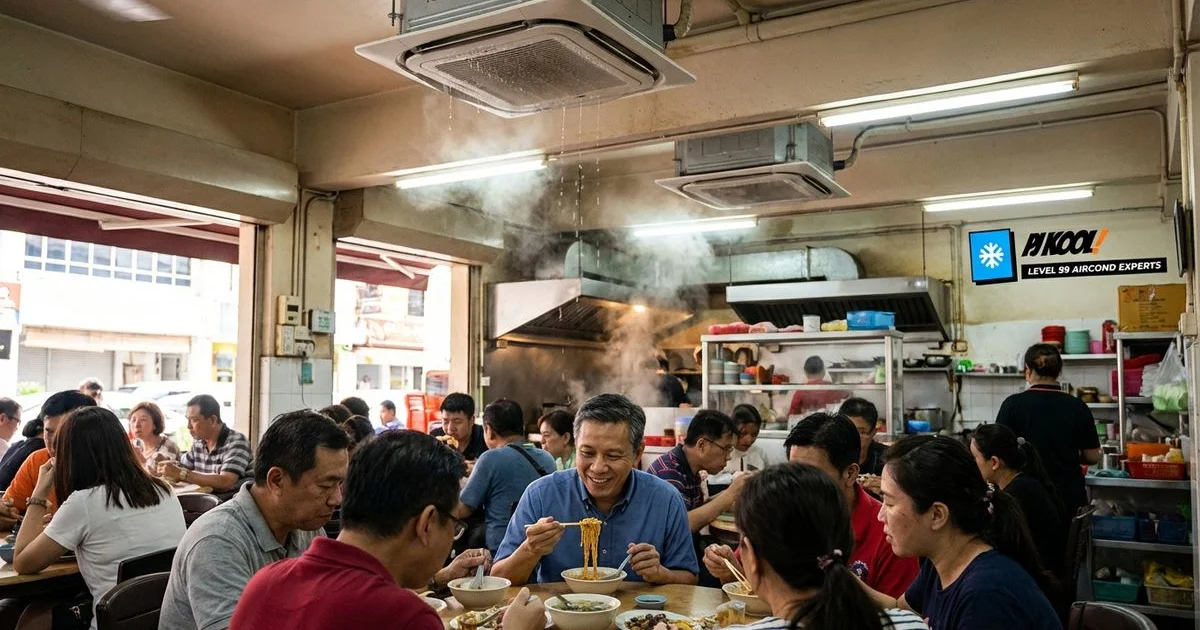
You know the feeling when you walk into a bustling cafe in SS2 or a busy restaurant in Damansara Uptown.
The first thing that hits you isn’t the smell of food. It is the temperature.
If it is cool and crisp, you relax. If it is hot and muggy, you likely turn around and walk out.
For F&B operators in Petaling Jaya, air conditioning is not a luxury. It is a critical operational asset that directly impacts your table turnover and average ticket size. A broken unit during Friday night service doesn’t just mean a repair bill. It means refunding angry customers and watching revenue walk out the door.
We have serviced thousands of commercial units across the Klang Valley. The data shows a clear pattern: F&B outlets treating their commercial units like residential airconds are losing money every single day.
Let’s look at why standard maintenance fails in kitchens and the exact schedule you need to keep your profits protected.
Why F&B Airconds Get Dirty 3x Faster
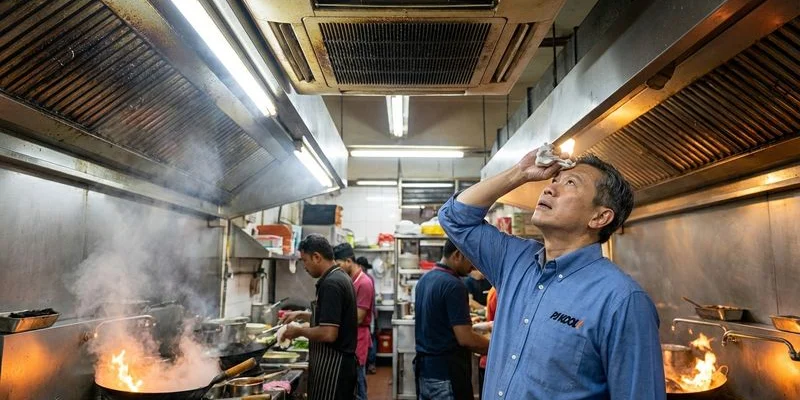
Commercial kitchens operate in a hostile environment for HVAC systems. The air quality in a restaurant kitchen is fundamentally different from a living room in Bandar Utama.
Your units are fighting a constant battle against three specific contaminants.
1. The Grease Vapour Problem
Cooking generates microscopic oil particles. Even with a high-performance exhaust hood, grease vapour escapes into the dining area.
We see the results of this daily on evaporator coils.
This airborne grease creates a distinct, sticky layer on the cooling fins. Dust settles on this adhesive layer and builds up into a thick “blanket” within weeks.
The impact on efficiency is severe:
- Thermal Barrier: This sludge layer insulates the coil, preventing it from absorbing heat.
- Airflow Restriction: The fan has to work twice as hard to push air through the clogged fins.
- Chemical Bond: Standard water cleaning cannot remove this. It requires an alkaline chemical wash to break down the polymerized grease.
2. Extreme Operating Hours
A typical office aircond runs for 8 or 9 hours a day.
Your restaurant units likely run from 10:00 AM to midnight. That is 14 hours of continuous operation. Mamak stalls operating 24 hours put their units under even more stress.
This increased runtime has consequences:
- Filter Loading: Filters that usually last a month in a home will clog in 7-10 days in a restaurant.
- Component Fatigue: Compressor valves and capacitors degrade at double the normal rate.
- Drainage Blockages: Continuous condensation promotes rapid algae growth in drain pans.
3. Massive Internal Heat Loads
Residential units only need to cool the air and a few people. Commercial units must fight against massive heat sources.
You have strictly commercial factors adding to the load:
- Kitchen Bleed: Heat from fryers, ovens, and salamanders migrates to the dining area.
- Occupancy Load: A full house on a Saturday night adds roughly 400-500 BTU of heat per person.
- Equipment Heat: Coffee machines, display chillers, and POS systems all radiate heat.
4. Humidity and Bio-Growth
Commercial dishwashing and boiling pots release gallons of water vapour into the air.
High humidity combined with the organic matter in grease creates a perfect breeding ground for mould. We frequently find colonies of Cladosporium mould inside neglected F&B units. This is what causes that sour, “wet sock” smell that ruins a customer’s appetite.
The Real Cost of Neglecting Commercial Aircond Maintenance
Many owners try to save money by skipping monthly services. This is a false economy.
The hidden costs of a dirty unit far outweigh the price of a service visit.
Inflated TNB Bills
A dirty condenser coil forces your compressor to run at higher amps to achieve the same cooling.
The financial impact is measurable:
- A unit with 20% airflow restriction can consume 30% more power.
- Under TNB’s commercial Tariff B (Low Voltage Commercial), this inefficiency adds up fast.
- For a shop lot running four 2.5HP cassette units, this inefficiency can add RM500 to RM1,500 to your monthly electricity bill.
The Emergency Repair Premium
Breakdowns rarely happen on a quiet Tuesday morning. They happen during your busiest shifts when the system is under maximum load.
Calling a technician for an emergency repair on a weekend or public holiday costs significantly more. You pay a premium for urgent mobilization, and you often have to pay for parts that could have been saved with preventative care.
Revenue Loss from Customer Churn
Malaysians have zero tolerance for heat while eating.
Competition in areas like SS2, Sunway, or Jaya One is fierce. If your shop is hot, customers will go to the competitor next door.
Consider the lifetime value of a regular customer:
- One bad experience due to heat can lose you a regular who spends RM50 weekly.
- That is RM2,600 in lost annual revenue from just one dissatisfied diner.
- Multiply that by a few tables, and the loss becomes staggering.
Compliance and Health Risks
The Food Hygiene Regulations 2009 require food premises to maintain suitable temperatures and ventilation.
Health inspectors in PJ and KL are increasingly vigilant about air quality. Visible mould on air vents is an immediate red flag during an inspection. It suggests poor general hygiene and can lead to demerit points or temporary closure orders.
The Monthly Maintenance Schedule for F&B
You cannot use a residential schedule for a commercial business.
We recommend the following protocol for F&B outlets in the Klang Valley to maintain peak performance.
| Task | Frequency | Impact on Business |
|---|---|---|
| Filter Cleaning | Weekly | Prevents airflow blockage; staff can do this in 10 mins. |
| Standard Service | Monthly | Professional check of gas pressure and water cleaning. |
| Drain Line Flush | Monthly | Prevents water leaks dripping onto customers/tables. |
| Chemical Wash | Quarterly | Removes sticky grease buildup standard water can’t touch. |
| Chemical Overhaul | Annually | Full dismantle to clean blower wheels and deep internal parts. |
This schedule keeps energy consumption steady and prevents the bio-slime buildup that causes sudden leaks.
Cassette Units vs Wall-Mounted: Special Considerations
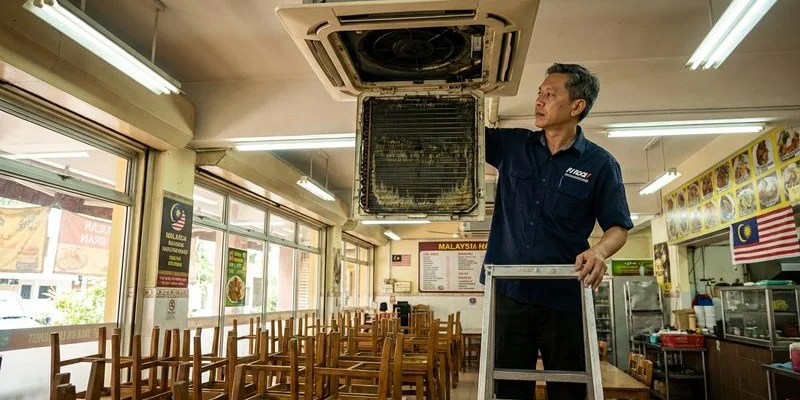
Most shop-lot restaurants in PJ utilize Ceiling Cassette Units.
These look professional and save wall space, but they introduce specific maintenance challenges that wall units do not have.
Why You Likely Use Cassettes
- 4-Way Airflow: They distribute cold air evenly to all corners of the dining room.
- Aesthetics: They sit flush with the ceiling, allowing for cleaner interior design.
- Power: They generally come in higher horsepower ratings suitable for open plans.
The Hidden Maintenance Risks
Cassette units rely on an internal drain pump to remove water. Wall units use gravity.
This pump is the weak point:
- The Slime Blockage: Grease and algae form a jelly-like sludge in the drain pan.
- Pump Failure: This sludge burns out the tiny motor in the drain pump.
- The Consequence: Water backs up and spills over the tray, raining dirty water directly onto your customers below.
Specific Care for Cassettes
We always perform a specific “pump check” during cassette maintenance.
- Technicians must pour water into the pan to verify the pump triggers correctly.
- The drain pan needs to be physically wiped out, not just sprayed.
- Checking the float switch prevents the overflow disaster before it happens.
Cost Comparison: Preventive vs Reactive Maintenance
Let’s look at the hard numbers for a typical restaurant with 3 cassette units over one year.
| Approach | Annual Cost (Estimated) | Hidden Risks |
|---|---|---|
| Monthly Plan | RM3,600 - RM6,000 | Minimal downtime. Predictable budgeting. Lower TNB bills. |
| ”Fix When Broken” | RM6,000 - RM12,000 | Includes compressor replacements, emergency labor rates, and lost food/sales. |
| Run to Failure | RM15,000+ | Premature unit replacement (CapEx). Health code violations. |
The data is clear. A monthly maintenance contract is roughly half the cost of the reactive approach when you factor in energy savings and major repairs.
Signs Your Restaurant Aircond Needs Immediate Service
Do not wait for the monthly visit if you see these red flags.
- The “Hot Spot” Complaint: If customers in one corner are sweating while others are cool, your gas pressure may be low or a specific blower fan is clogged.
- The Sulphur Smell: A rotten egg or sour smell upon startup indicates bacteria is growing on the wet cooling coil. This is a health hazard.
- Water Stains on Ceiling: Dark patches near the cassette unit mean the drain pump is failing. Address this before the ceiling plaster collapses.
- Ice on Pipes: If you see white ice forming on the copper pipes near the outdoor unit, you have a gas leak or zero airflow. Turn the unit off immediately to save the compressor.
- Rising Decibels: A unit that suddenly gets louder often has a balanced fan wheel disrupted by heavy grease buildup.
Tips for F&B Business Owners
- Automate the Schedule: Do not rely on memory. Set a recurring appointment with your vendor for the first Monday of every month.
- Staff Training: Teach your closing shift to wipe down the exterior vents. Grease accumulation there attracts dust and looks unprofessional.
- Air Curtains: Install an air curtain (blower) above your main entrance. It keeps expensive cold air inside and hot street air outside.
- Thermostat Discipline: Lock your remotes or thermostats. Staff setting the temp to 16°C freezes the coil and wastes electricity. 23°C-24°C is optimal for dining comfort.
- Log Books: Keep a service record. It is useful for warranty claims and shows health inspectors you are diligent.
PJ Kool Commercial Maintenance
We specialize in keeping F&B businesses running cool.
Our team understands the unique pressures of the food industry in Petaling Jaya, Damansara, SS2, Subang Jaya, and Shah Alam. We do not just spray water and leave. We provide a comprehensive service that targets grease, improves air quality, and lowers your TNB bill.
Our Commercial Plan Includes:
- Scheduled monthly servicing during your off-hours.
- Chemical cleaning tailored for grease removal.
- Priority response for breakdowns (because we know Sunday lunch is critical).
WhatsApp us at 012-2252 623 to discuss a maintenance plan for your F&B outlet. We can assess your current setup and provide a transparent, flat-rate monthly quote.
Visit our commercial maintenance page to see how we help other local businesses stay cool and profitable.
Tags:
commercial aircondrestaurant maintenanceF&B aircondmonthly maintenancePJ businesscommercial HVAC
Related Articles!
Need Professional Aircond Help?!
Don't guess — let our senior technicians diagnose and fix your aircond. WhatsApp us now!