Mr. Heng ·
guides  | |
| |
How to Choose the Right HP for Your Room Size (Aircond Sizing Guide)
Mr. Heng
Founder & Lead HVAC Technician
aircond HPaircond sizingBTU guide
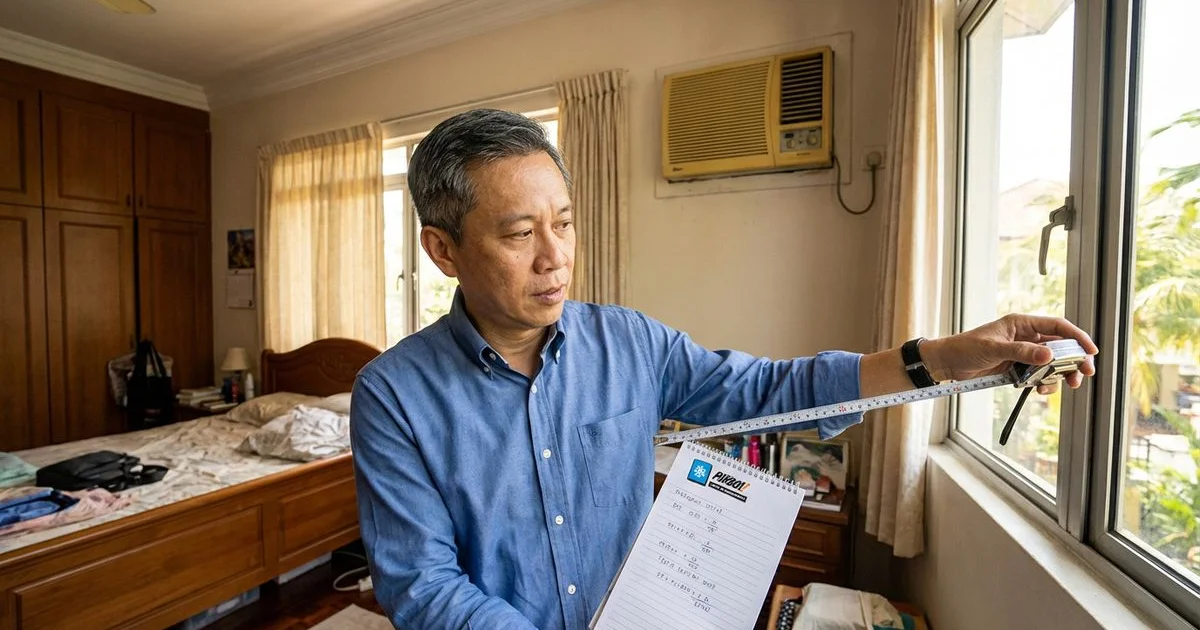
Buying a new aircond involves more than just picking a brand. You have to get the horsepower (HP) calculation right to handle our intense Malaysian heat.
Get this wrong, and you will likely face monthly electricity bills that are 20% to 30% higher than necessary. We see this happen constantly in homes across Petaling Jaya and Kuala Lumpur.
This guide helps you identify the perfect cooling capacity for your specific room type.
Why HP Matters
HP (horsepower) measures the cooling strength of your aircond. It relates directly to BTU (British Thermal Units), which indicates how much heat the unit removes per hour.
We often compare this to a car engine. A small engine in a heavy lorry will overheat and fail quickly.
What Happens If You Get It Wrong:
Too small (undersized):
- The compressor runs non-stop without pausing.
- Your room never reaches the set temperature on hot afternoons.
- The electricity bill skyrockets due to continuous high-power usage.
- Internal parts wear out years earlier than expected.
- You feel sweaty and frustrated in your own home.
Too large (oversized):
- The room cools down too fast for the dehumidification process to work.
- The air feels cold but sticky or “clammy” due to high humidity.
- Short cycling (turning on and off rapidly) damages the starter components.
- You pay a higher upfront price for capacity you do not need.
Your goal is to match the aircond capacity to your room’s specific cooling load.
HP to Room Size Guide for Malaysia
Malaysia’s tropical climate is demanding and requires approximately 25% more cooling capacity than temperate regions. Our technicians generally recommend calculating based on 650-750 BTU per square metre for local residential properties.
This ensures your unit can handle the midday heat in the Klang Valley.
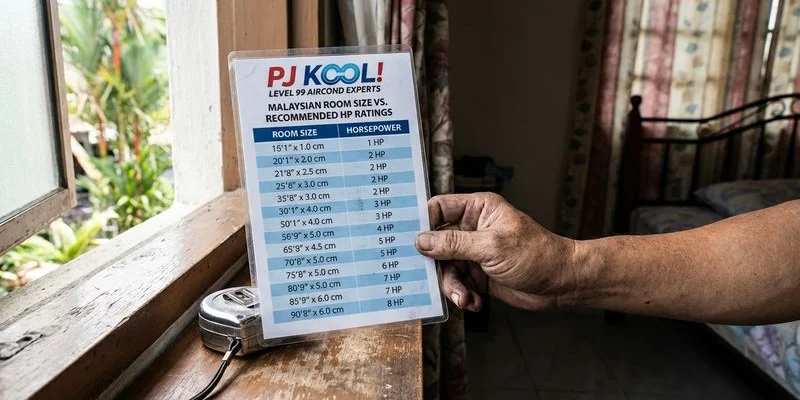
Quick Reference Table
| Room Size (sq ft) | Room Size (sq m) | Recommended HP | Cooling Capacity (BTU) |
|---|---|---|---|
| 100 - 150 | 9 - 14 | 1.0 HP | 9,000 - 10,000 |
| 150 - 250 | 14 - 23 | 1.5 HP | 12,000 - 13,000 |
| 250 - 350 | 23 - 33 | 2.0 HP | 18,000 - 19,000 |
| 350 - 450 | 33 - 42 | 2.5 HP | 24,000 - 25,000 |
| 450 - 600 | 42 - 56 | 3.0 HP | 28,000 - 30,000 |
Room Type Examples
Different rooms in Malaysian homes have unique cooling needs.
| Room Type | Typical Size | Recommended HP |
|---|---|---|
| Small Bedroom (Condo/Flat) | 100 - 120 sq ft | 1.0 HP |
| Standard Bedroom (Terrace) | 120 - 180 sq ft | 1.0 - 1.5 HP |
| Master Bedroom (With ensuite) | 200 - 300 sq ft | 1.5 - 2.0 HP |
| Living Room (Apartment) | 250 - 350 sq ft | 2.0 HP |
| Living Room (Landed/Open Plan) | 350 - 500 sq ft | 2.5 - 3.0 HP |
| Home Office (With electronics) | 150 - 200 sq ft | 1.5 HP |
Factors That Affect Your Choice
The table above is a solid starting point. However, specific environmental factors in your home may require you to adjust your choice.
We assess these variables during every site inspection.
1. Sun Exposure (The “West Sun” Factor)
Rooms facing west absorb intense heat from 2:00 PM until sunset. The walls retain this heat well into the night.
If your bedroom faces west:
- Go one size up. A 150 sq ft room needing 1.0 HP should get 1.5 HP.
- Consider blackout curtains. These help reduce the initial heat load.
- South-facing glass: Large windows facing south also require 20-30% more capacity.
2. Ceiling Height Variations
Standard Malaysian apartments feature 9 to 10-foot (2.7-3.0m) ceilings. Many newer landed properties and lofts now feature much higher clearances.
- High ceilings (12+ feet / 3.6m+): The volume of air is much larger, so go one size up.
- Double-volume ceilings: These living areas are notoriously hard to cool.
- Recommendation: You likely need a ceiling cassette unit or a professional evaluation.
3. Occupancy Levels
Bodies generate heat. An adult at rest generates roughly 350-400 BTUs of heat energy.
- Standard usage: A bedroom with 2 people requires no adjustment.
- High traffic areas: A living room that hosts 6+ people for family gatherings needs extra power.
- Meeting rooms: Add 400 BTU for every person regularly in the room.
4. Heat-Generating Equipment
Electronics act like small heaters. A high-performance gaming PC can output as much heat as two extra people.
- Kitchens: Ovens and hobs add massive heat loads; add 20% capacity.
- Home Offices: Two monitors and a desktop tower warrant an extra 1,500 BTU.
5. Insulation and Construction
| Factor | Adjustment Required |
|---|---|
| Concrete walls (Shaded) | Standard sizing applies |
| Glass walls (Floor-to-ceiling) | Add +20% capacity |
| Top floor (Directly under roof) | Add +25-30% capacity |
| Open-plan layout (No doors) | Calculate total combined area |
6. Floor Level
Your floor level significantly impacts ambient temperature in high-rise buildings.
- Ground floor units: These remain cooler as they are shaded by the floors above.
- Top floor units: The roof absorbs solar radiation all day, transferring heat down to you.
- Middle floors: These usually follow standard sizing guidelines.
Common Mistakes Malaysians Make
Mistake 1: Ignoring the “Open Concept” Trap
Many modern homes connect the living room, dining area, and dry kitchen. We often see homeowners buy a 2.0 HP unit for the living area, forgetting that the cool air will escape into the dining room. You must calculate the square footage of the entire open space.
Mistake 2: Buying Based on Price Alone
A 1.0 HP unit might be RM300 cheaper than a 1.5 HP model. However, if that 1.0 HP unit has to run at maximum power for 8 hours a day, the extra electricity costs will exceed that RM300 savings within the first year.
Mistake 3: The “Bigger is Always Better” Myth
Installing a massive 2.5 HP unit in a small 100 sq ft bedroom is a bad idea. The unit will cool the air in minutes and shut off before it removes the humidity. You end up with a room that feels cold, damp, and uncomfortable.
The BTU Calculation Method
For a precise number, we use the BTU calculation formula. This is the math our technicians perform to ensure accuracy.
- Calculate Volume: Length x Width x Height (in feet).
- Apply Base Multiplier: Multiply by 5 (The standard factor for Malaysia).
- Add for Sun: Add 10% if the room faces west.
- Add for People: Add 400 BTU per person over 2 people.
Example Calculation: Imagine a master bedroom that is 15x12 feet with a 10-foot ceiling.
- Volume: 15 x 12 x 10 = 1,800 cubic feet.
- Base BTU: 1,800 x 5 = 9,000 BTU.
- Result: This equals roughly 1.0 HP.
- Adjustment: If this room faces west, we add 10% (900 BTU) for a total of 9,900 BTU.
- Verdict: Since 9,900 is at the limit of a 1.0 HP unit, we would recommend a 1.5 HP model for guaranteed comfort.
How to Measure Your Room
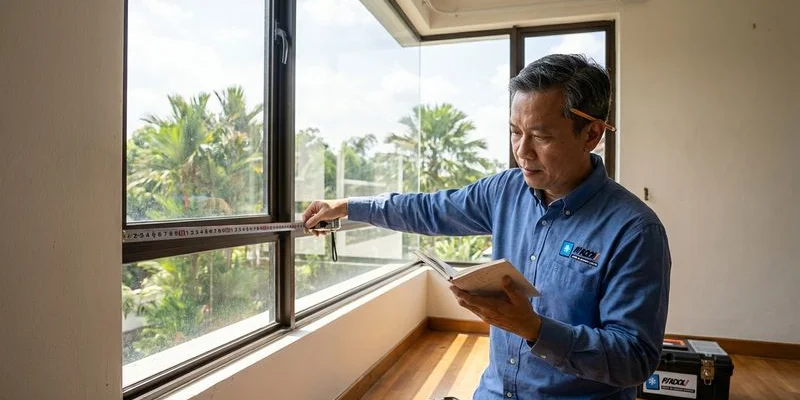
You do not need laser tools to get a good estimate. A simple tape measure works fine.
- Measure length: Get the distance of the longest wall in feet.
- Measure width: Get the distance of the shorter wall in feet.
- Multiply: Length x Width = Total Square Feet.
Example: A room measuring 12 feet by 15 feet equals 180 sq ft. This places you firmly in the 1.5 HP range.
If your room is L-shaped, split it into two rectangles. Calculate the area of each rectangle separately and add them together.
Inverter vs Non-Inverter Sizing
Your choice of technology affects your sizing strategy. We wrote a detailed guide on inverter vs non-inverter airconds, but here is the sizing rule of thumb.
Inverter Units (Flexible) These units can vary their compressor speed.
- Strategy: It is safer to slightly oversize.
- Why: A 1.5 HP inverter in a 1.0 HP room will simply run at 60% capacity. It is quiet and efficient.
Non-Inverter Units (Fixed) These units run at 100% power or 0% power.
- Strategy: You must be precise.
- Why: Oversizing causes the unit to blast cold air and shut off immediately (short cycling). Undersizing means it never stops running.
Mr. Heng’s Pro Tips
Mr. Heng, our lead technician, has installed thousands of units across Subang Jaya, Shah Alam, and KL. Here are his top insights from the field:
-
“When in doubt, go one step up.” It is much better to have a 1.5 HP unit running quietly at medium speed than a 1.0 HP unit screaming at full capacity. The electricity usage is often lower with the larger, unstressed unit.
-
“Watch the outdoor unit placement.” If you put the compressor in a narrow airwell or direct sunlight, it cannot release heat efficiently. We often recommend a slightly higher HP to compensate for poor ventilation areas in condos.
-
“Inverters are worth it for bedrooms.” For rooms where you sleep, the temperature stability of an inverter is crucial. A non-inverter’s temperature swings of 1-2°C can disrupt sleep sensitive individuals.
-
“Don’t guess with glass houses.” Modern homes with floor-to-ceiling glass are heat traps. Standard calculation tables do not apply here. You almost always need a site visit to calculate the solar heat gain accurately.
Need Help Choosing?
Calculating BTUs and account for ceiling heights can be confusing.
WhatsApp us at 012-2252 623 with your room photos and dimensions. We will perform the calculation for you and recommend the ideal unit size.
We also offer free site assessments for new installation projects. Check our aircond installation page for our latest pricing packages.
Tags:
aircond HPaircond sizingBTU guideroom size calculatorMalaysia aircondaircond buying guide
Related Articles!
Need Professional Aircond Help?!
Don't guess — let our senior technicians diagnose and fix your aircond. WhatsApp us now!