Mr. Heng ·
guides  | |
| |
How Often Should You Service Your Aircond? (Malaysia Climate Guide)
Mr. Heng
Founder & Lead HVAC Technician
aircond maintenanceservicing schedulechemical wash frequency
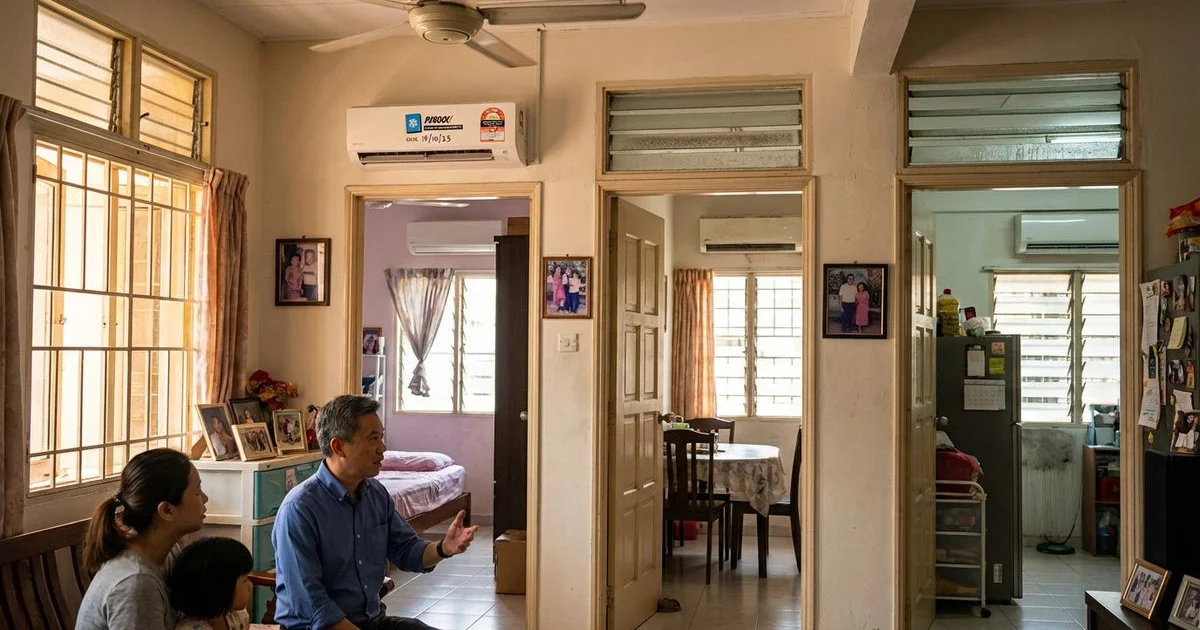
“How often should I service my aircond?” is the single most frequent question we hear from homeowners in Petaling Jaya and KL. The answer is rarely a simple “every three months” because it depends entirely on your specific lifestyle. You need a schedule that accounts for heavy daily usage and the intense humidity of the Klang Valley.
We have developed a practical framework based on thousands of service visits across the region.
The Short Answer
If you want a quick reference before diving into the details, this table outlines the general rules of thumb we use.
| Service Type | Recommended Frequency | Can You DIY? |
|---|---|---|
| Filter Cleaning | Every 2-4 weeks | Yes |
| Standard Servicing | Every 3-4 months | No (Professional) |
| Chemical Wash | Every 6-12 months | No (Professional) |
| Chemical Overhaul | Every 2-3 years (if needed) | No (Professional) |
These figures are baselines. Your actual needs will likely vary based on the specific factors we will discuss next.
Why Malaysia’s Climate Demands More Frequent Servicing
Living in a tropical zone places a significantly higher load on your cooling units compared to temperate countries. We find that the local environment creates a unique set of challenges for air conditioning systems.
- The “Urban Heat Island” Effect: Areas like PJ and KL trap heat, keeping nightly temperatures around 27-28°C. This forces your compressor to work harder and longer without a rest period.
- Extreme Humidity (80%+ Average): High moisture levels rapidly mix with dust to create a thick “biofilm” or jelly on your cooling coils. This jelly is the number one cause of water leaks we fix.
- Constant Airborne Particulates: Haze episodes and vehicle exhaust from major highways like the LDP contribute fine particles (PM2.5) that bypass basic filters and coat internal components.
A unit in Subang Jaya simply accumulates grime 30% to 50% faster than a unit in a cooler, drier climate.
Factors That Determine Your Servicing Frequency
1. Daily Usage Hours and Electricity Costs
The duration your unit runs is the primary driver of wear and tear. We always remind customers that running a dirty unit doesn’t just reduce cooling; it spikes your Tenaga Nasional Berhad (TNB) bill.
| Usage Level | Hours per Day | Standard Service | Chemical Wash |
|---|---|---|---|
| Heavy | 8+ hours (Home Office/Sleeping) | Every 3 months | Every 6 months |
| Moderate | 4-8 hours (Evening Only) | Every 4 months | Every 8-9 months |
| Light | Under 4 hours | Every 6 months | Every 12 months |
A standard 1.5HP inverter unit running efficiently costs significantly less to operate than a choked one. Our data indicates that a clogged aircond consumes between 15% and 25% more electricity to reach the same temperature. For a household in the higher TNB tariff block (Tier 4 or 5), this inefficiency can add RM50 to RM100 to your monthly bill.
2. Environment and Location
Your specific neighbourhood in the Klang Valley plays a massive role in dust accumulation. We see distinct differences in air quality depending on proximity to development.
- Construction Zones: If you live near ongoing projects like the new developments in Kwasa Damansara or Elmina, you face heavy cement dust. You must check your filters monthly.
- Highway Proximity: Homes facing the Federal Highway or NKVE absorb greasy soot from vehicle exhaust. This sticky residue is harder to clean than normal dust.
- Ground Floor Living: Units on lower levels intake more organic debris and garden dust than high-rise condos.
3. Pets in the Home
Pet owners face a specific challenge that often goes unnoticed until the unit leaks. Fur and dander are notorious for bypassing the primary filter and forming a felt-like mat on the evaporator coil.
If you have cats or dogs, we strongly advise the following adjustments:
- Inspect Filters Weekly: You will be surprised at how fast fur accumulates.
- Vacuum Before Washing: Remove the fur layer with a vacuum cleaner before wetting the filter to prevent clogging your sink.
- Quarterly Professional Cleans: Do not skip the 3-month mark, as dander promotes rapid mould growth inside the wet unit.
4. Allergies or Respiratory Conditions
A clean aircond is a health requirement for families dealing with asthma or rhinitis. The dark, damp interior of a cooling unit is the perfect breeding ground for Aspergillus mould and bacteria.
We recommend a stricter schedule here because the aircond fans blow these spores directly into your sleeping area. Regular chemical cleaning is the only way to effectively kill these biological contaminants.
5. Age of the Unit
Newer units are generally more forgiving, but efficiency drops as components age.
| Unit Age | Servicing Needs |
|---|---|
| 0-3 years | Follow standard schedule |
| 3-7 years | Increase frequency by 20% to protect the compressor |
| 7-10 years | Chemical wash every 6 months is critical to maintain efficiency |
| 10+ years | Focus on maintenance to extend life, but prepare for replacement |
Older units often suffer from brittle plastic parts and worn insulation. Our technicians treat these veterans with extra care during handling.
What Happens During Each Service Type
Filter Cleaning (DIY, Every 2-4 Weeks)
This simple task yields the highest return on investment for your time. You can complete it in under 15 minutes.
- Power Down: Always switch off the isolator switch for safety.
- Remove: Lift the front panel and gently slide the filters out.
- Wash: Use lukewarm water. Avoid stiff brushes that can tear the mesh.
- Dry: Lean them against a wall to air dry. Direct sunlight can warp the plastic frames.
- Reinstall: Snap them back in only when fully dry.
The “Torch Test”: Shine a torch through your filter. If the light is blocked, the air is blocked.
Standard Servicing (Professional, Every 3-4 Months)
A general service is about maintenance and prevention. Our team performs a comprehensive checklist during these visits:
- Filter & Panel Cleaning: Removing surface grime.
- Evaporator Brushing: Clearing dust from the cooling fins.
- Drainage Flush: Vacuuming the drain pipe to prevent water leaks.
- Health Check: Measuring gas pressure and amperage to detect potential failures early.
Chemical Wash (Professional, Every 6-12 Months)
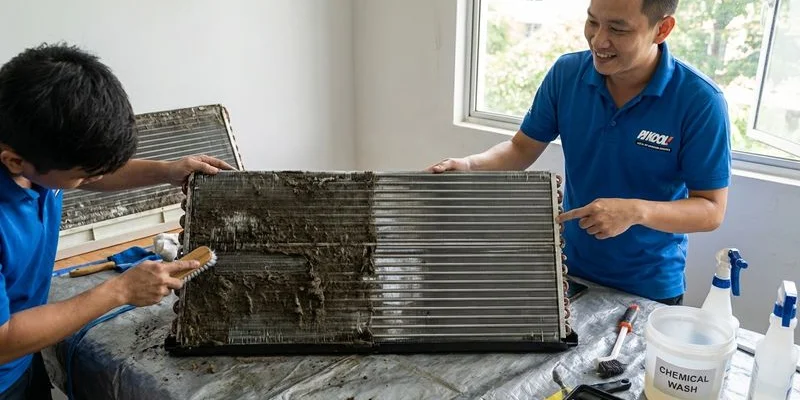
This is a restoration service. A chemical wash uses an alkaline solution to dissolve the stubborn oxidation and biofilm that water alone cannot move.
- Deep Penetration: The solution foams up inside the coil, pushing out deep-seated dirt.
- Bacteria Elimination: It sanitizes the unit, removing the musty “sour socks” smell.
- Performance Boost: This service typically restores airflow by 30% or more.
Chemical Overhaul (Professional, Every 2-3 Years)
We reserve this intensive procedure for units that are heavily clogged or have not been serviced in years. It involves pumping down the refrigerant gas and physically removing the indoor unit from the wall.
Every component is dismantled and chemically treated separately. This is essentially resetting the unit to a near-factory state of cleanliness.
Warning Signs You Need Service NOW
waiting for the calendar notification can sometimes be a mistake. Your unit will often tell you when it is struggling.
- The “Sweat” Test: If you enter the room and it feels clammy rather than crisp, the humidity removal is failing.
- Water Leaking: Any dripping indicates a blocked drain tray or pipe.
- Musty Odour: A smell of vinegar or mildew indicates active mould growth.
- Ice Formation: If you see white ice on the copper pipes, you likely have a gas leak or a severely choked coil.
- Sudden Noise: Rattling often means the blower fan is off-balance due to heavy dust buildup.
Setting Up a Maintenance Schedule
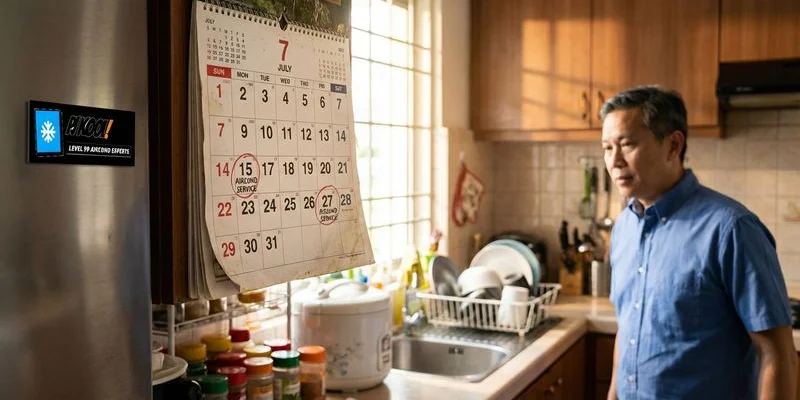
Consistency is key to longevity. We suggest syncing your aircond maintenance with other quarterly household tasks to make it easier to remember.
Here is a balanced annual plan for a typical Selangor home:
| Month | Action Item |
|---|---|
| January | Chemical Wash + Full Inspection (Start the year fresh) |
| April | Standard Service (Prepare for the mid-year heat) |
| July | Chemical Wash + Gas Check (Deep clean for haze season) |
| October | Standard Service (Routine maintenance) |
| Monthly | DIY Filter Cleaning (First weekend of the month) |
This rotation ensures your unit never runs dirty for long.
The Cost of Skipping Maintenance
Many people skip a service to save RM100, but they often end up paying RM1,500 later. The economics of maintenance are clear when you look at the potential repair costs.
| Consequence | Estimated Financial Impact |
|---|---|
| Increased Energy Bills | RM30-RM80 extra per month |
| Compressor Failure Repair | RM800 - RM2,000+ |
| Early Unit Replacement | RM1,500 - RM4,000 (Daikin/Panasonic Inverter) |
| Chemical Overhaul (Neglected Unit) | RM150 - RM250 |
| Annual Maintenance Program | RM300 - RM500 |
Regular care is an investment that protects your wallet from the high cost of emergency breakdowns.
Book Your Next Service
We specialize in keeping homes in PJ, Damansara, Subang Jaya, and Shah Alam cool and comfortable. Our technicians focus on honest assessments and will never upsell a chemical wash if a standard service is all you need.
You can reach us directly on WhatsApp at 012-2252 623 to book a slot. For a detailed breakdown of our deep cleaning options, please check our chemical wash service page.
Tags:
aircond maintenanceservicing schedulechemical wash frequencyMalaysia aircondaircond cleaning
Related Articles!
Need Professional Aircond Help?!
Don't guess — let our senior technicians diagnose and fix your aircond. WhatsApp us now!